
A School Recruitment Case Study
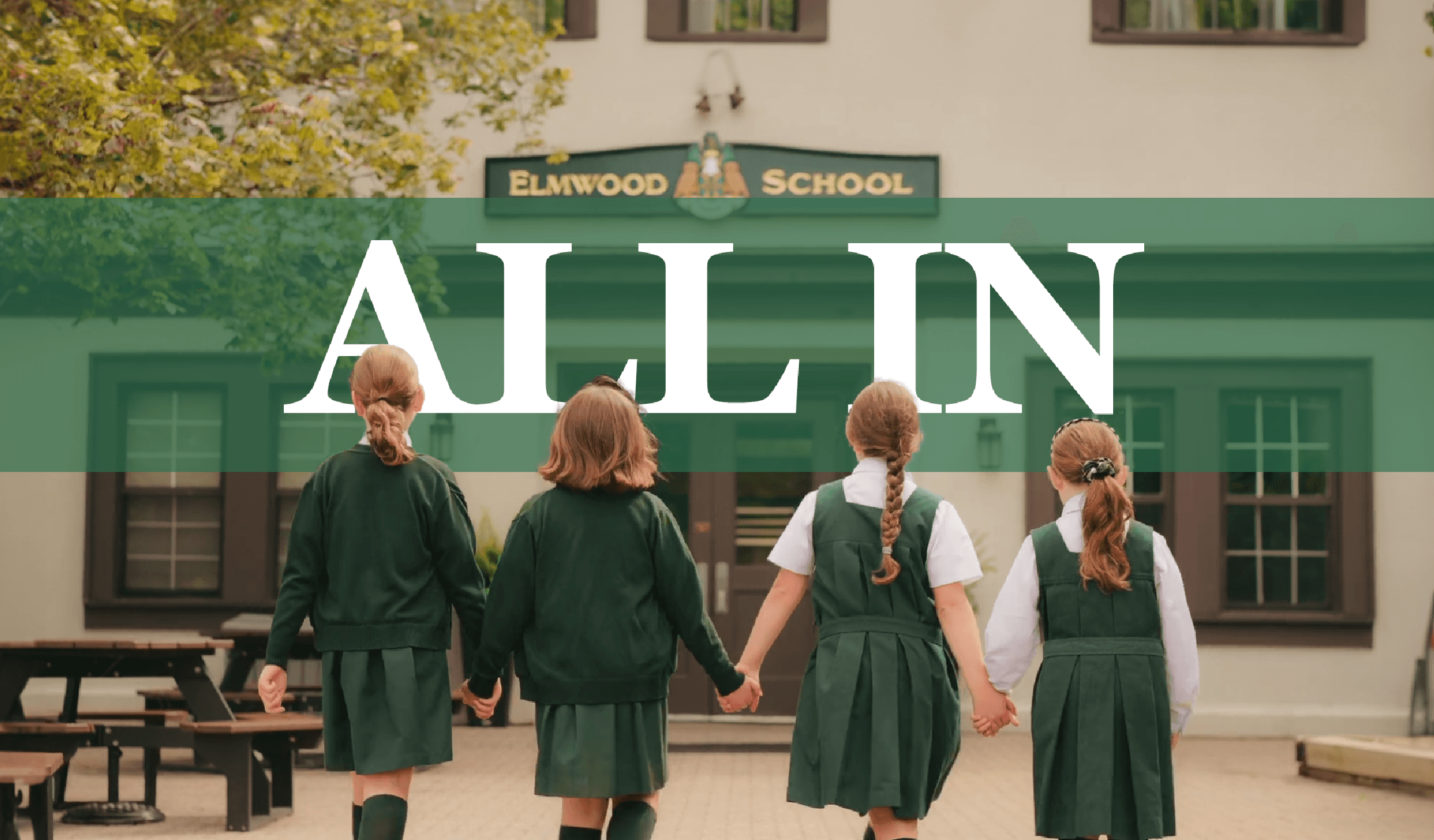
The short version: School recruitment ads usually ask families to commit. For Elmwood School, we reversed that and had the school make the first promise: We're all in, so she can stand out. It ran for two admissions cycles. Traffic to the Admissions pages grew both years, reaching +20.81% year over year in year two. And in year two we didn't reshoot a single photo.
Choosing a school for your daughter isn't a purchase. It's a leap of faith, with a tuition bill attached.
Most school marketing ignores that. It opens with prestige: rankings, results, a crest, a lawn. Then it waits for parents to prove they're worthy of it.
Parents aren't asking "Is this school impressive?" They're asking "Will anyone actually know my kid? Will she be okay? And who's covering pickup at 3:15?"
What was the insight?
Every recruitment campaign asks families to commit first. We flipped it and had Elmwood commit first.
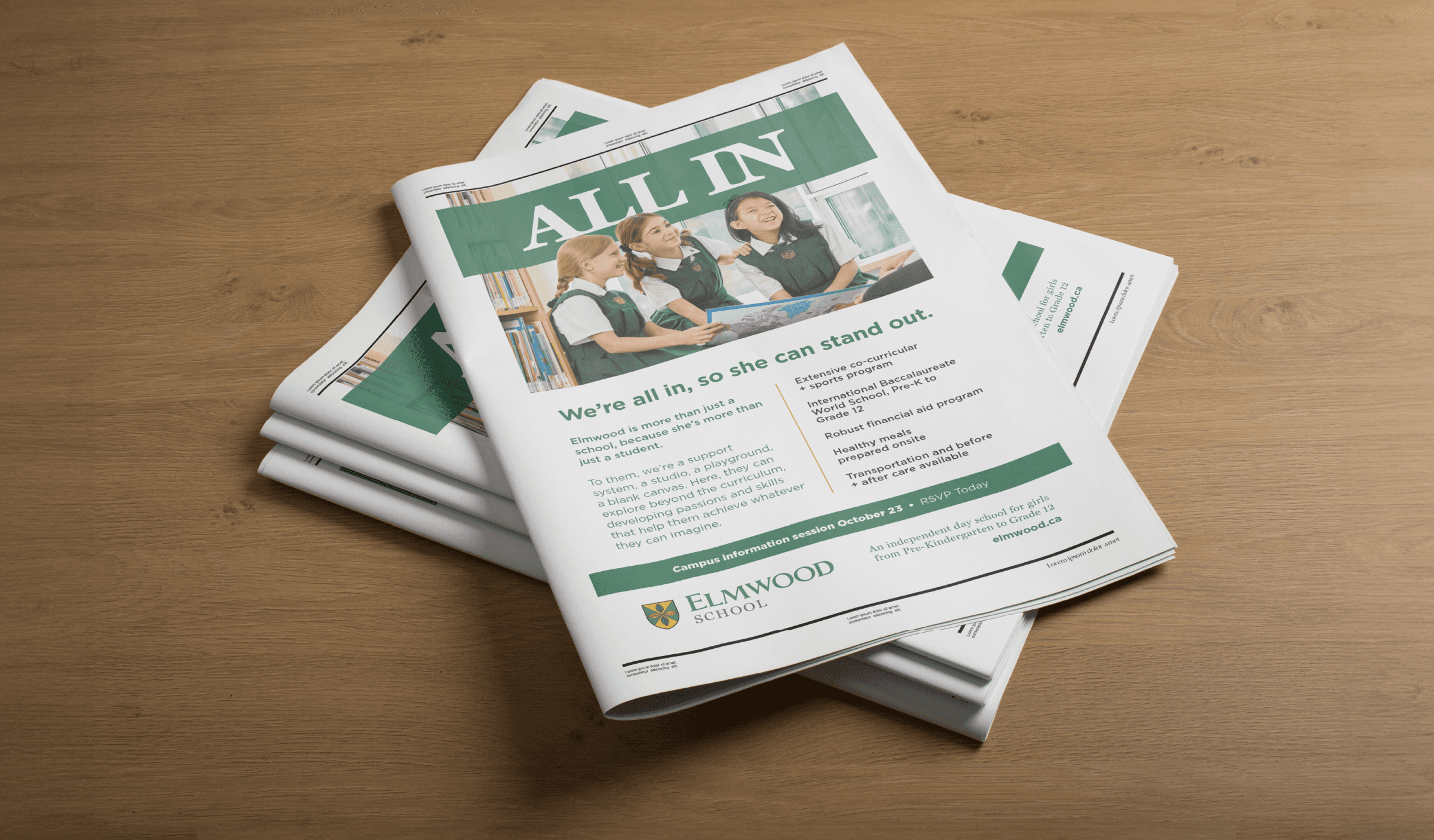
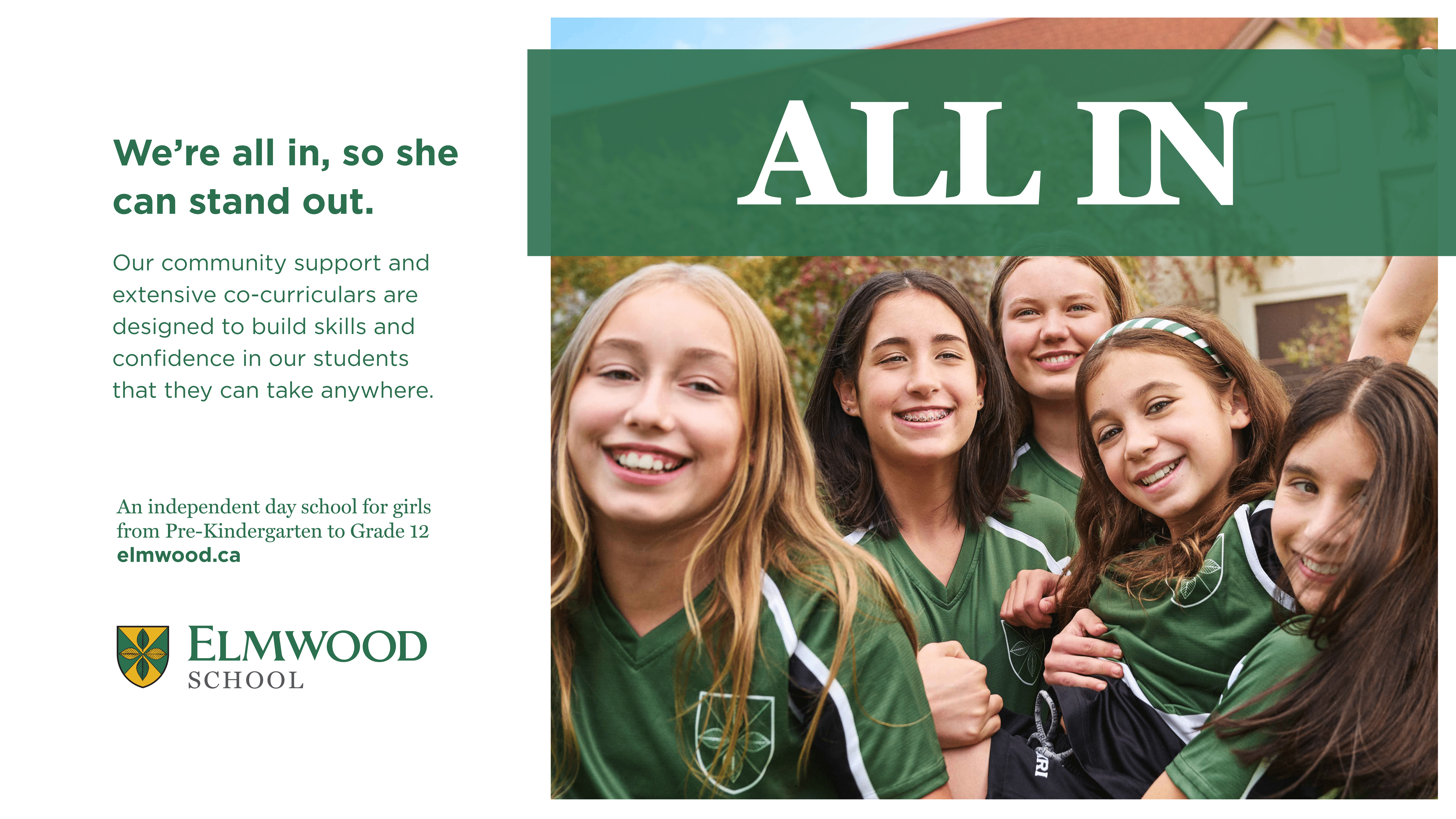
We're all in, so she can stand out.
"All In" said the school was invested in the whole girl: teachers who know her, individualized support, leadership, social-emotional growth, co-curriculars. It also covered the practical stuff families quietly worry about, like transportation and before- and after-school care.
It works for mission-driven organizations of any kind. When your audience is already carrying a lot, reassure them before you ask for anything.
How do you talk about anxiety without selling fear?
Carefully. The parent research showed real anxiety about getting this decision right. If you name that fear too directly, you've made a fear-based ad.
"All In" answered the worry without repeating it back to parents. The headline carried the promise, and the proof points backed it up. Parents felt understood without being told what to be afraid of.
One campaign, four very different audiences
A four-year-old's parents and a Grade 11 student's parents don't have the same questions. Four separate campaigns would have split the budget and blurred the brand.
So we built one master platform that could flex:
Junior School: foundation and family support
Middle School: academic, social, and emotional growth
Senior School: individual pathways, university prep, opportunities beyond the classroom
The core promise stayed fixed. The school level, proof points, imagery, and CTA changed around it.
Real students, in their own words
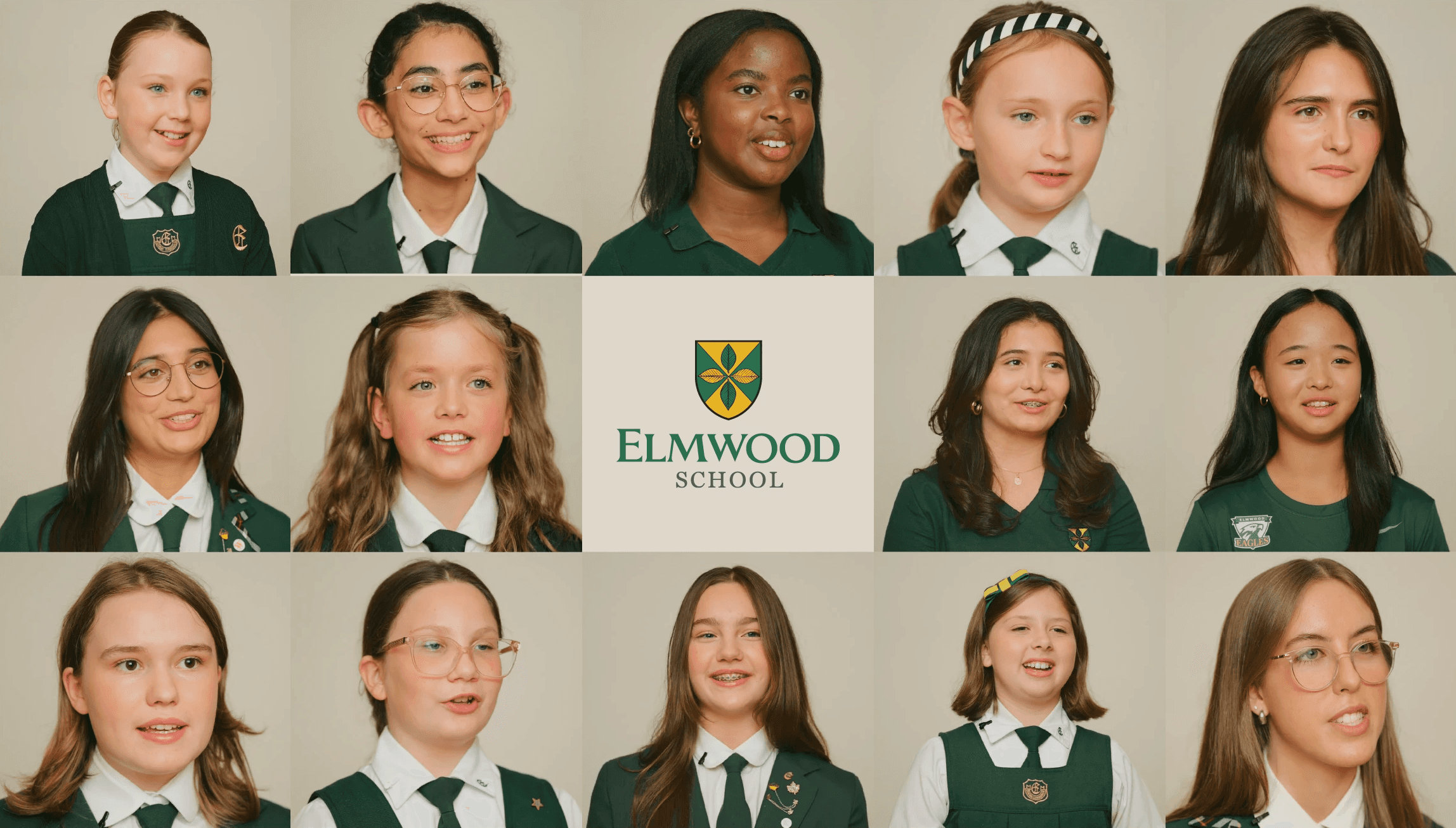
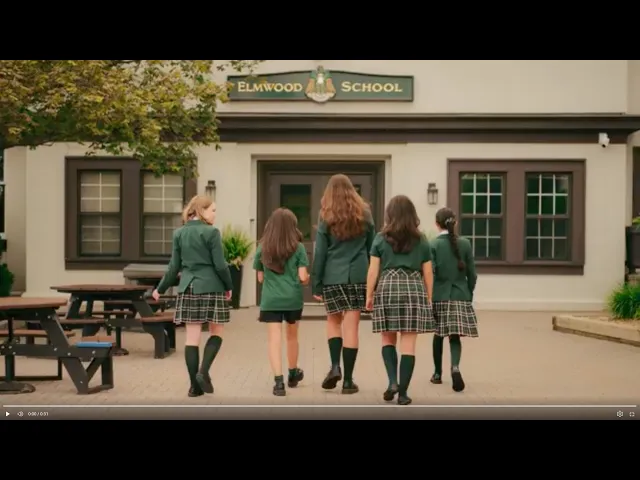
The girls were the proof, so they were the talent. Photography treated them as individuals, not uniforms. In year two, student-led video let them describe Elmwood themselves. Younger students talked about teachers and friends. Older students talked about confidence, leadership, and what comes next.
We gave them light direction, age-appropriate prompts, and a little rehearsal, and no scripts.
Evolve it, don't reinvent it
This is the part most organizations get wrong. When a campaign works, the temptation is to replace it with something new.
We didn't. In year two:
No new still photography. We extended the licence on four of the best 2023 images.
The budget moved to something new, student-led video.
A new production partner was briefed against the visual rules we'd already set (candid expression, real campus settings, warm observational moments), so the new video carried the campaign forward instead of starting it over.
The same platform ran two cycles and felt fresh in the second. Your audience doesn't get tired of a strong idea nearly as fast as your internal team does.
Built for the whole admissions season, not a single burst
The fall Information Session fell in the middle of the media flight, so we designed every print and digital piece in two versions from the start: register for the Info Session before the event and book a campus tour after it. The campaign switched over without a creative rebuild.
It also moved fast. In year one, the brief landed July 19, concepts were presented July 31, the shoot was August 31, and the first print deadline was September 20.
Did it work?
Traffic to the Admissions pages rose 17.52% year over year in the first campaign year
Then rose 20.81% year over year in the second
No creative was pulled for underperforming. The platform held, and only the tactics and CTAs changed with the recruitment cycle.
What mission-driven marketers can take from this
Make the first commitment. Show what you're giving before you ask for anything.
Answer the fear without repeating it.
Build one platform with flex points, not four separate campaigns.
Let the people you serve be the proof.
Evolve instead of reinventing. Reuse what works and put new money into new formats.
Plan your CTAs around the whole journey, not just the launch.